









By Kenneth Eze, a Civil Society Actor and Public Affairs Analyst
Background: The Paradox of the Coal City State
The political atmosphere in Enugu State, fondly referred to as the Coal City State, has always been a fascinating study of Nigeria’s democratic evolution. Often described as the “heartbeat of the East” due to its rich intellectual and cultural history, Enugu has generally maintained a political culture distinct from the volatile nature of its neighbors.
However, beneath the veneer of this political stability lies a structural dysfunction that has defined governance at the grassroots level for decades: the absolute control of Local Government Areas (LGAs) by the state governor.
Following the landmark Supreme Court judgment of July 11, 2024, which declared the State-Local Government Joint Account unconstitutional and ordered the direct disbursement of funds to democratically elected LGAs, many Nigerians hoped for a new dawn of grassroots development.
Yet, two years after this judgment, the reality on the ground in Enugu suggests that financial independence for the 17 LGAs remains a mirage.
The latest flashpoint is the All Progressives Congress (APC) local government primaries held in May 2026 ahead of the October 2026 council elections.
The outcome—where several first-term APC chairmen were denied return tickets while others were cleared—has raised difficult questions about the real criteria for political survival within the system:
Was it performance, loyalty, or control of council finances?
A Chronicle of Executive Dominance (1999–2026)
To understand the current controversy regarding return tickets, one must first examine the long history of gubernatorial influence over Enugu’s local government system.
During the administration of Dr. Chimaroke Nnamani (1999–2007), the famous “Ebeano” political structure reportedly transformed local government chairmen into political instruments for sustaining state-level influence and financial control.
Under Governor Sullivan Chime (2007–2015), while infrastructure expanded significantly in Enugu urban areas, critics argued that rural LGAs remained financially constrained under centralized control mechanisms.
The administration of Rt. Hon. Ifeanyi Ugwuanyi (2015–2023) further intensified concerns regarding caretaker committees, delayed elections and reduced local government independence.
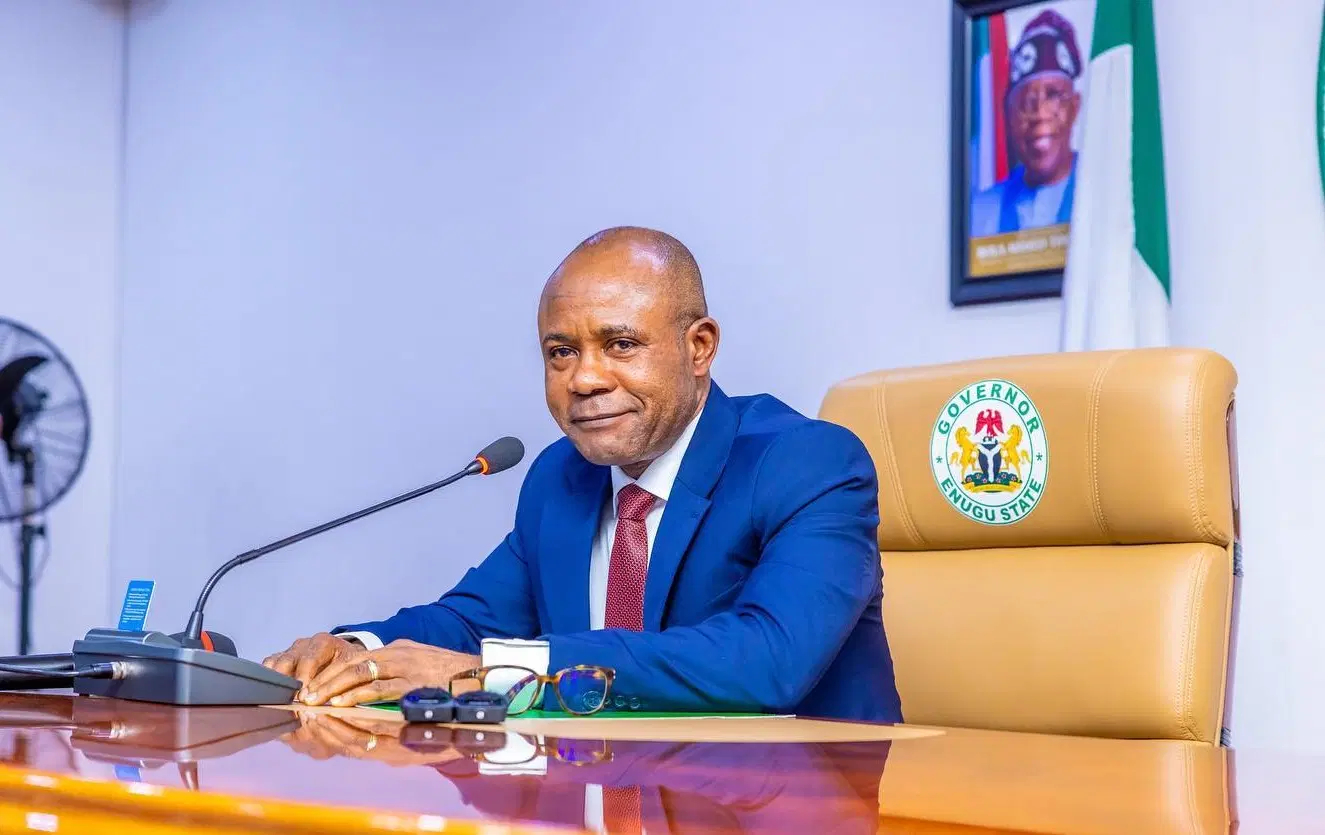
With Governor Peter Mbah’s administration (2023–present), debates surrounding local government autonomy have re-emerged strongly following reports that the 17 LGAs allegedly granted broad fiscal control powers to the state through revenue arrangements managed by the state’s internal revenue structure.
The APC Primaries and the Return Ticket Debate
Political tensions escalated after the APC conducted local government primaries across Enugu State in May 2026.
Several incumbent chairmen reportedly failed to secure return tickets despite expectations that loyalty to the ruling structure would guarantee political continuity.
Analysts and civil society observers now question the criteria used in determining which chairmen were retained and which were excluded.
Critics argue that since most LGAs allegedly operate under heavy fiscal supervision from the state government, it becomes difficult to evaluate genuine independent performance at the council level.
If local governments lack meaningful control over their finances, can performance truly be measured independently?
The Question of State Capture
The article raises broader concerns about what many governance experts describe as “state capture”—a situation where political power becomes concentrated around centralized interests at the expense of institutional independence.
According to this argument, when local government chairmen are unable to exercise financial discretion or execute projects independently, democratic accountability at the grassroots level weakens significantly.
Observers warn that such a system may encourage political loyalty over service delivery, thereby creating a political culture where obedience becomes more valuable than developmental impact.
The implications for grassroots governance are severe:
- Weak rural development
- Reduced local accountability
- Erosion of constitutional federalism
- Dependence on political godfathers
- Suppression of independent local leadership
The Supreme Court Judgment and LG Autonomy
Following the Supreme Court judgment of 2024 on local government autonomy, many Nigerians expected state governments to fully comply with direct allocation structures.
However, concerns remain regarding implementation, transparency and whether local governments have genuinely achieved operational independence.
Civil society organisations continue to demand greater transparency in local government funding and stronger constitutional protections for grassroots administration.
Conclusion
The debate surrounding Enugu’s APC primaries extends far beyond party politics. It reflects deeper questions about governance, accountability and the future of grassroots democracy in Nigeria.
If local government administration remains financially dependent on state executives, then democratic participation at the grassroots risks becoming symbolic rather than substantive.
As Nigeria moves closer to the 2027 general elections, many observers believe that the future of democratic governance may depend significantly on whether local government autonomy becomes reality rather than rhetoric.
Ultimately, citizens expect local governments to function as genuine third-tier institutions capable of delivering development directly to the people—not merely extensions of state political structures.
Kenneth Eze is a Civil Society Actor and Public Affairs Analyst from Enugu State.
Email: engrchukeze2014@gmail.com