











By Kenneth Eze, Civil Society Actor & Public Affairs Analyst
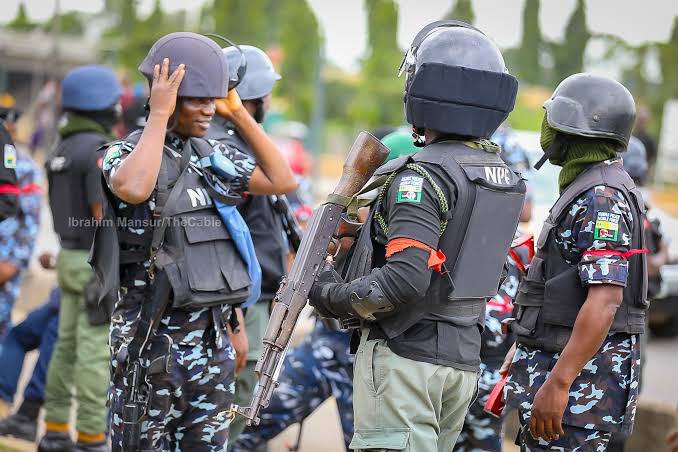
Abuja - Nigeria’s current move toward state police is understandable. The country is battling layered insecurity: insurgency, banditry, kidnapping, communal violence, farmer-herder conflicts, urban crime and separatist tensions. A centralised police structure, designed for a different era, has become overstretched and often too distant from the communities it is expected to protect. This is why many Nigerians, including civil society actors, have long argued that policing must become more local, intelligence-driven and responsive.
However, the speed with which the current State Police Bill has moved through the federal legislature raises a serious democratic question: why is the same urgency not being shown to local government autonomy?
Public reports indicate that President Bola Tinubu transmitted a constitutional alteration bill on state police to the Senate in June 2026, seeking a dual policing structure that allows states to establish police services alongside the federal police. The House of Representatives reportedly passed the State Police Bill on June 11, 2026, and the Senate passed it on June 24, 2026, meaning the process has moved with remarkable speed and now requires the constitutionally required state-level ratification process.
That speed may be defended on security grounds. But if security is truly the motivation, then local government autonomy deserves equal urgency. State police without functioning local governments will be like a car without an engine. It may have a body, tyres and paint, but it will not move the people toward safety.
As we know, the security question begins at the grassroots. The local government is not a ceremonial tier of government. It is the closest constitutional authority to the people. It is where birth registration, primary health, local markets, rural roads, community disputes, youth unemployment, neighbourhood vigilance, early warning signals and traditional/community intelligence first appear.
Insecurity does not begin in Abuja. It does not even begin in most state capitals. It begins in villages, wards, settlements, markets, forests, border communities, motor parks, farms, schools and neglected urban neighbourhoods. These are local government spaces.
If local councils are weak, captured or financially disabled, the state police will inherit a blind security environment. Officers may wear state uniforms, but they will still lack the community intelligence, local legitimacy and preventive governance architecture needed to stop insecurity before it matures into violence.
Historically, the 1976 Local Government Reforms were designed to bring government closer to the people and devolve services and development activities to local representative bodies. The reform is widely regarded as a major turning point in Nigeria’s attempt to make local government a meaningful tier for grassroots development and participation.
The 1999 Constitution also guarantees a system of democratically elected local government councils. Section 7 provides that the system of local government by democratically elected councils is constitutionally guaranteed, although state governments are empowered to make laws on their establishment, structure, finance and functions. This constitutional design shows that local government was never meant to be a political appendage of governors. It was meant to be the democratic base of the Nigerian federation.
On July 11, 2024, the Supreme Court delivered a landmark judgment on local government autonomy. The court ruled that allocations should go directly to the accounts of Nigeria’s 774 local governments and that caretaker committees are illegal for purposes of receiving federal allocations.
That judgment was not merely a financial ruling. It was a democratic rescue mission. It reaffirmed that the local government is not a department under the governor’s office. It is a constitutional tier of government whose resources should serve citizens directly.
Yet, nearly two years after that judgment, implementation remains contested and uneven. Reports and governance analyses have continued to raise concerns that state-level control, legal loopholes and implementation delays are still frustrating the full effect of the ruling.
This is why the current state police window must be maximised. If the National Assembly, President Tinubu and state governors can move quickly on state police, they must move with the same urgency on local government autonomy. Nigerians will read political meaning into any selective urgency. Thus, the Supreme Court has opened the door. Political will must now enter.
For decades, many state governors resisted local government autonomy because control of local councils means control of money, party structures, grassroots patronage and local political machinery. Now that state police is on the table, governors appear more willing to support constitutional alteration because it strengthens state-level authority over security. That is precisely why Nigerians must insist on balance.
Governors cannot demand state police in the name of security while rejecting local government autonomy in the name of political convenience. They cannot ask for decentralisation upward to themselves while resisting decentralisation downward to the people. They cannot claim that Abuja is too far from the states while pretending that state capitals are not too far from rural communities.
If the principle is decentralisation, then it must be honest. If the argument is local knowledge, then local governments must matter. If the objective is community security, then the councils that know the wards, families, forests, markets and local conflict histories must be empowered.
To approve state police while leaving local councils politically strangled would be a contradiction. It would create a security structure controlled by governors but unsupported by democratic grassroots governance. That is not federalism. That is state-level centralisation. Hence, hypocrisy is when governors accept state police and reject local autonomy.
More so, one of the major fears around state police is abuse by governors. Critics have warned that state police could be used against opposition parties, dissenters, journalists, civic actors, traditional leaders and unfriendly communities. International and local reports on the 2026 bill note both the security rationale and the concerns that state-controlled police could be politicised or unevenly funded across richer and poorer states.
Local government autonomy can serve as one democratic safeguard against this abuse. Autonomous councils, elected and financially empowered, can create local accountability channels. They can host community policing committees, support early warning systems, document abuses, convene local security dialogues and provide a democratic counterweight to the concentration of coercive power at the state level.
Without local autonomy, state police may become an instrument in the hands of governors alone. With local autonomy, state police can become part of a wider community security ecosystem. State police without local autonomy may become a political weapon.
Sadly, some reduce local government autonomy to federal allocations. That is too narrow. True autonomy has at least four dimensions.
First, financial autonomy: local governments must receive and manage their funds directly, subject to transparent auditing and public accountability.
Second, political autonomy: local councils must be democratically elected, not imposed through caretaker committees or manipulated local elections.
Third, administrative autonomy: councils must recruit, manage and deploy personnel necessary for service delivery without being reduced to state ministry extensions.
Fourth, developmental autonomy: councils must plan and implement local priorities based on community needs rather than political instructions from state capitals.
These dimensions are central to security. A council that cannot repair rural roads cannot support patrol access. A council that cannot maintain markets cannot reduce youth vulnerability to criminal recruitment. A council that cannot support primary schools and local health posts cannot sustain stable communities. A council that cannot gather local data cannot provide credible intelligence.
Security is not only guns and uniforms. Security is governance that works early enough to prevent violence.
Furthermore, state police and local government autonomy are Siamese twins. One without the other is incomplete. State police provide decentralised enforcement. Local government autonomy provides decentralised legitimacy, intelligence and prevention. State police can respond to crime. Local governments can identify the conditions that breed crime. State police can patrol roads. Local governments can repair the roads, light the streets, register neighbourhoods and mobilise ward-level trust. State police can arrest suspects. Local councils can coordinate community reconciliation, youth engagement, local dispute resolution and early warning systems. State police may carry arms. Local government carries the daily trust of the people.
Therefore, any constitutional reform that prioritises state police but ignores local government autonomy is structurally defective. It may create a powerful state security apparatus without the grassroots democratic engine needed to make it accountable and effective.
In this vein, the demand is simple: show the same speed, energy and political courage on local government autonomy that has been shown on state police. If the State Police Bill can move within days, local government autonomy reforms should not sleep in committees. If governors can be mobilised for state police ratification, they must also be challenged to support local autonomy. If the National Assembly can cite insecurity as justification for accelerated policing reform, it must also admit that grassroots governance failure is one of the roots of insecurity.
The constitutional alteration process requires national legislative action and state assembly ratification. The National Assembly’s own explanation of constitutional alteration recognises the special majority and state assembly ratification requirement under Section 9. This means the same political coalition now pushing state police can also push local government autonomy if the will exists.
Therefore, we call on civil society, the media, traditional institutions, youth groups, professional bodies and community leaders to insist on five minimum demands:
- The National Assembly should immediately place local government autonomy reforms on the same accelerated constitutional amendment track as state police.
- President Tinubu should publicly endorse simultaneous passage of state police and local government autonomy as twin reforms for security and grassroots development.
- State governors should support both reforms or be honest enough to oppose both. Selective support will expose self-interest.
- State Houses of Assembly should ratify both reforms together, not treat state police as urgent and local autonomy as inconvenient.
- Any state police framework should include clear local government roles in community policing, early warning, accountability, local security advisory councils and citizen oversight.
In conclusion, Nigeria must not repeat its old habit of treating symptoms while ignoring roots. State police may be necessary, but it is not sufficient. Insecurity will not be defeated by decentralising police command alone. It will be defeated when local governance, local accountability, local development and local intelligence begin to work. A state police structure without local government autonomy is a lifeless body. It is a car without an engine. It is a reform that may look bold on paper but fail in practice.
If the intention behind state police is truly national security, then local government autonomy must receive equal and immediate attention. Anything less will confirm the suspicion that the rush for state police is not only about citizens’ safety but also about political control ahead of 2027.
President Tinubu, the 10th National Assembly and state governors have a historic window. They can either deepen democracy or deepen suspicion. They can either empower citizens or empower only governors. They can either pass state police and local government autonomy together, or leave Nigerians to conclude that grassroots democracy is still being sacrificed for elite convenience.
Do not build state police on crippled councils. The time to rescue local government autonomy is now.
...Kenneth Eze writes from Abuja, Nigeria.
engrchukeze2014@gmail.com